
Local Quality and Technology: Why Choose Latvian-Made Eco-Wool for Home Insulation, and How to Install It Properly?
Ecology and Recycling: At Balticfloc, we produce eco-wool from recycled paper (newsprint). By insulating your home with this material, you not only save energy but also give paper a second life, reducing your overall carbon footprint.
As cooler weather approaches, every homeowner starts thinking about reducing heating bills and ensuring comfort. There are many thermal insulation materials available on the market, but more and more people are choosing eco-friendly and energy-efficient solutions.
Did you know that one of the best and most natural materials is produced right here in Latvia? Balticfloc eco-wool is designed for our climate, and thanks to professional installation, it provides flawless thermal insulation for decades.
Why choose Balticfloc eco-wool, specifically?
Ecology and Recycling: At Balticfloc, we produce eco-wool from recycled paper (newsprint). By insulating your home with this material, you not only save energy but also give paper a second life, reducing your overall carbon footprint.
Ideally suited for Latvia’s changing climate: Ekovate is a hygroscopic material—it “breathes.” It regulates moisture by absorbing it and releasing it back into the environment without losing its thermal insulation properties. This completely eliminates the risk of condensation and mold, which is particularly important during Latvia’s damp autumns and variable winters.
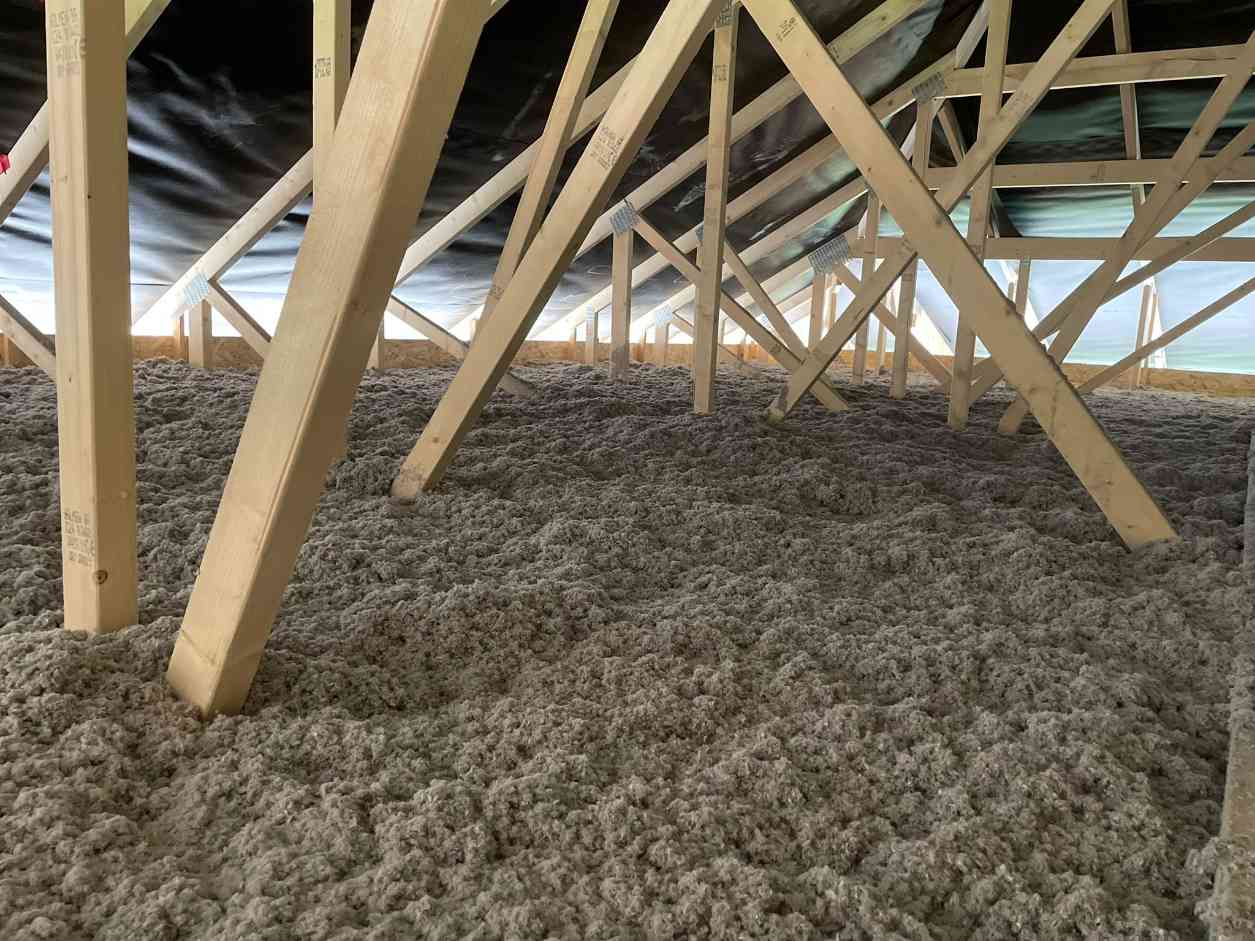
Seamless thermal insulation: Unlike roll or sheet materials, ecowool is installed using a special blowing technology. It completely fills even the smallest cracks, joints, and gaps around utility pipes, preventing the formation of thermal bridges.
Fire Safety and Pest Control: Natural salts (borates) are added to eco-wool during the manufacturing process. These ensure that ecowool does not burn (it merely chars, thereby slowing the spread of fire). These mineral additives also ensure that rodents (mice, rats) or insects will not live in the thermal insulation layer.
Technical Process: How Is Eco-Wool Installed?
The effectiveness of Ekovate depends directly on its proper installation and precise density. Balticfloc provides a full-cycle service—we not only manufacture the material, but also perform its professional mechanical installation ourselves using specialized equipment.
Depending on the specifics of the construction, we use two main methods of installing blown-in insulation: open-cell and closed-cell installation.
Open-Pit Mining (Open-Pit Excavation)
This method is used for horizontal surfaces and structures that are freely accessible from above and that are not immediately subjected to mechanical loads after installation.
- Where it is used: Most commonly in uninhabited attic floors, above ceiling structures, and in floor joists before installing the subfloor.
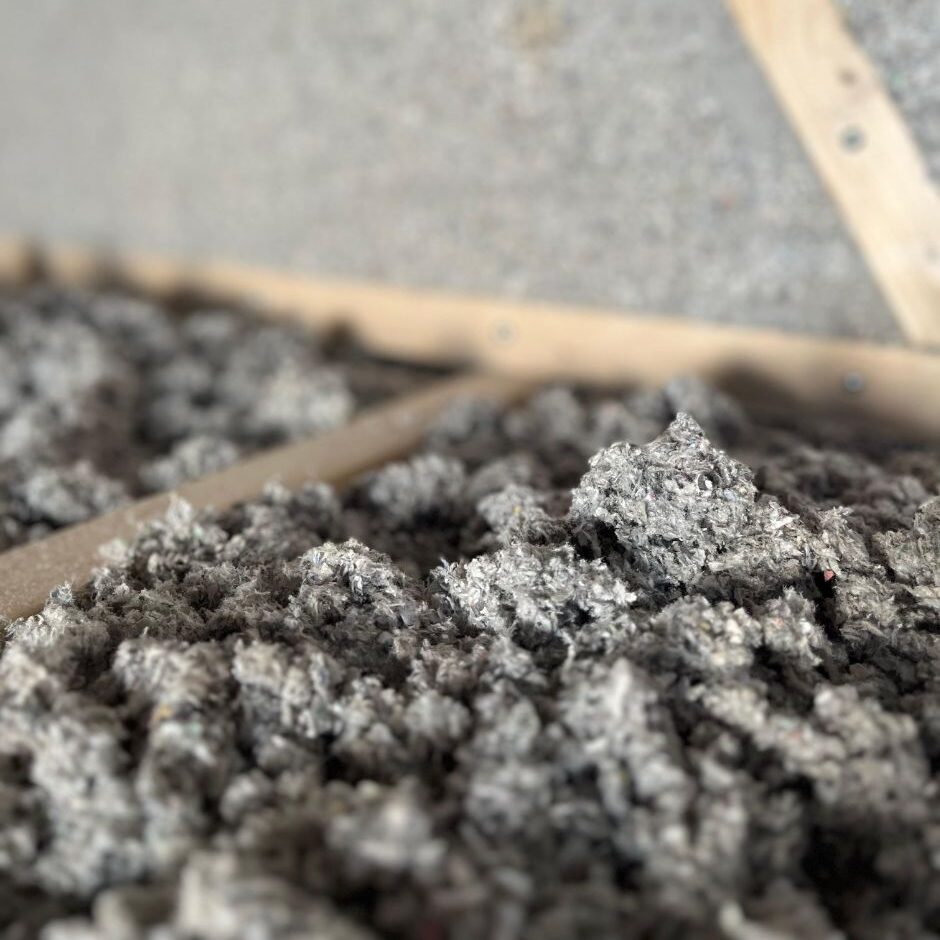
- How it works: Ekovate is blown freely onto the surface through a hose using air pressure. The material forms a soft, even, and monolithic “snow-like” layer that precisely covers all utility pipes and fills even the smallest gaps. The density of Ekovate installed in this manner is typically around 30–35 kg/m³.
Closed-Mold Injection (Pressurized Injection)
This method is used in structures that have already been fully sewn on both sides, creating a confined, enclosed space, or “pocket.”
- Where it is used: On the slopes of residential attic roofs, in prefabricated wood-frame walls (that have already been lined on the inside with drywall or sheeting), and in floor slabs and interior walls for sound insulation.
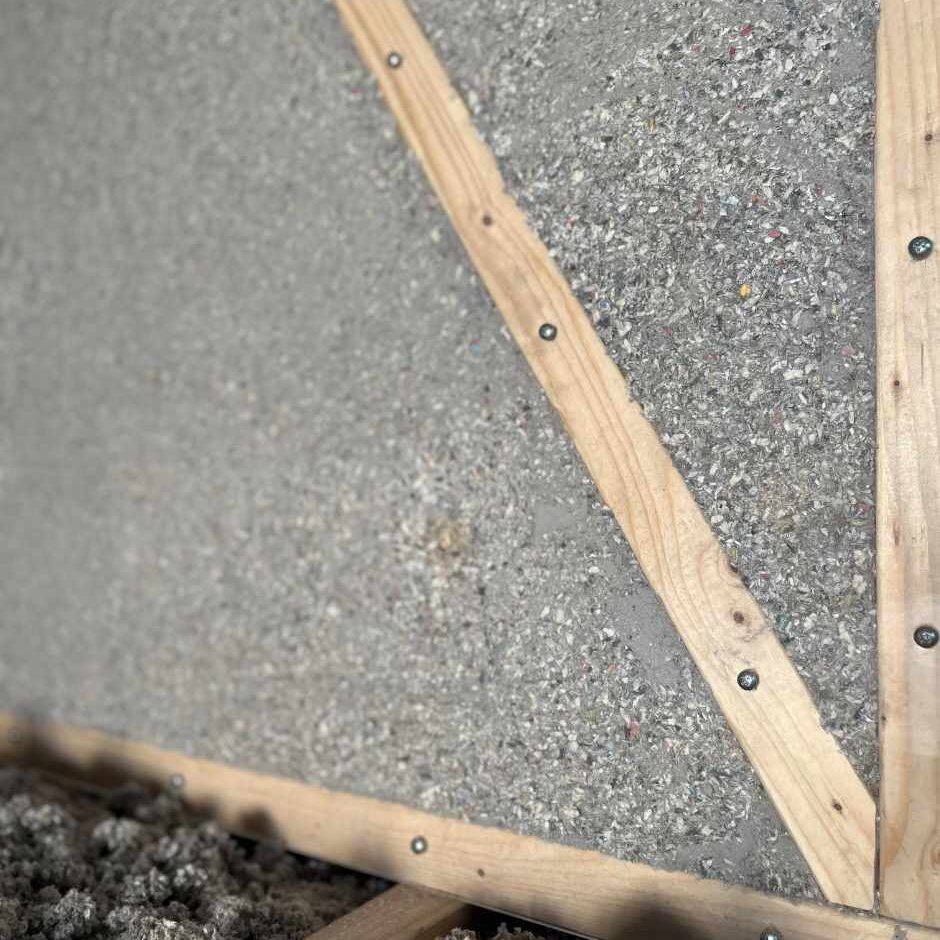
- How it works: Small holes are drilled into the structural insulation material or membrane. A special hose (or nozzle) is inserted through these holes into the structure, and eco-wool is blown in under high air pressure. The material is densely compacted until it completely fills all voids.
- Main advantage: Since the material is compressed under high pressure, a high density is achieved (typically 45–65 kg/m³). This high density ensures that Ekovate will not settle over time or under the influence of gravity in vertical and sloped structures, thereby retaining its shape and thermal insulation properties throughout the building’s lifespan.
Are you planning to insulate your attic, roof slopes, or walls? Contact our team, and we’ll perform the necessary calculations and recommend the best installation method for your specific project!