
Balticfloc Loose-Fill Cellulose Wool
Balticfloc loose-fill cellulose wool is made from recycled paper fibers and installed by blowing the material directly into the area being insulated. This allows the soft fibers to fill gaps and irregular spaces throughout walls, floors and roof structures, creating a continuous layer of thermal insulation.
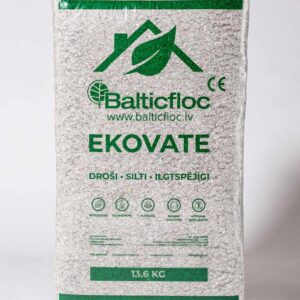
What is loose-fill ecowool and how does it work?
Balticfloc loose-fill ecowool is a cellulose insulation made primarily from recycled waste paper. Unlike insulation supplied in boards or rolls, the loose wool is installed using specialized blowing equipment that distributes the fibers throughout the space being insulated.
This installation method gives the material several useful characteristics:
- the loose fibers provide continuous coverage around framing and other irregular areas, helping minimize gaps in the insulation layer;
- the cellulose fibers provide moisture buffering by absorbing and releasing water vapor as surrounding humidity changes, helping manage short-term moisture fluctuations within a properly designed structure.
What are the advantages of loose wool insulation?
The loose structure of cellulose wool makes efficient use of both the material and the available space. Rather than cutting insulation to fit around framing, blown-in wool is distributed directly into the area being insulated.
The main advantages of loose wool insulation include:
- minimal installation waste, since there are no board or batt offcuts;
- improved fire performance provided by additives incorporated during manufacturing;
- effective thermal and sound insulation from the dense cellulose fiber structure;
- moisture-buffering properties that allow the fibers to absorb and release water vapor.
Balticfloc manufactures its loose-fill ecowool in Latvia using recycled paper as its primary raw material. This gives an existing material another useful life while producing insulation suitable for a range of residential building applications.
Balticfloc loose-fill ecowool made in Latvia
processed into soft fibers and treated with additives that provide the properties required of the finished loose wool.
Producing the insulation in Latvia also keeps manufacturing close to Balticfloc’s local customers and reduces the distance the finished material needs to travel within the Latvian market.
Loose-fill ecowool can be installed in open horizontal areas as well as enclosed sloped or vertical cavities. The required installation method and density depend on the structure, so the material should be installed according to the manufacturer’s specifications.
How do you choose the right ecowool thickness
The required insulation thickness depends on where the loose-fill ecowool will be installed and the thermal performance required for the building. Attics can accommodate a deeper layer of loose insulation, while walls and sloped roofs are limited by the depth of their framing.
| Structure | Thickness | What to consider | ||
| Attic | 35–45 cm (14–18 in.) | Open horizontal areas can accommodate a thick, continuous layer of loose wool insulation. | ||
| Sloped roof | 25–35 cm (10–14 in.) | Enclosed sloped cavities require the material to be installed at the appropriate density to maintain complete coverage. | ||
| Timber-frame walls | 20–30 cm (8–12 in.) | The available depth is determined largely by the wall framing. Correct installation density helps prevent gaps from developing within the cavity. |
These figures provide general guidance. The final thickness and installation density should follow the thermal requirements of the project and Balticfloc’s specifications for the particular structure.
How much does loose-fill wool cost?
Loose wool insulation can be a cost-effective way to insulate a building, but the price of loose-fill wool alone does not determine the total project cost. The amount of material needed depends on several factors, including:
- the size and location of the area being insulated;
- the required insulation thickness and installation density;
- the building structure and any project-specific installation requirements.
What affects the final installation cost for ecowool?
The total cost of a blown-in wool insulation project includes more than the insulation itself. Labor and preparation requirements can vary considerably depending on where the material will be installed. Factors that can affect the final cost include:
- labor costs, although loose-fill insulation can be installed quickly, which can result in lower labor costs than other insulation methods;
- the size and type of structure being insulated, since open horizontal areas are generally faster and easier to insulate than enclosed cavities;
- preparatory work and additional materials, such as vapor control or wind barrier membranes required by the building design;
- changes to the framing or cavity depth if additional space is needed for the required insulation thickness;
- temporary supports or other equipment that may be needed during installation.
When planning insulation work, it is important to consider not only the cost of the material, but also the preparation and installation required. Loose wool insulation can be a cost-effective option, but the cost of professional installation and specialized blowing equipment should also be factored into the overall project cost.